(contribution to MI Reads Group - Inconvenient Indian - June 2015)
 As always, for me at least, in thinking about Inconvenient.. a Curious Account.. and such works - I wonder what else can I do?
I appreciate all new approaches, interest, vision and hope that springs up. But I also know it was the efforts, and hopes, and failings of so many, for so long, that have brought us here.
Tom ends his book with : 'If the last five hundred years are any indication, what the Native people of North America do with the future should be very curious indeed." Will the same go for all the rest of us?
The progress on Native justice in Canada is on many fronts, from celebration, honouring, deep and lasting fixes to immediate issues like gross racism, poverty, health and education, to longer-term ones like backing out from our colonial repression devices such as residential schools, horrid medical experiments, reserves, to learning to honour treaties and peoples in a balanced way.
After hope-filled celebrations, when we return to our private lives and TV news, all the hopefulness can seem so minor, subtle and ephemeral compared to many other problems of daily and national life - ISIS, Health Care & Taxes, Elections, Climate Change and eco-destruction, immigrant /ethnic communities' worries and outlooks, Hockey, Kids, home maintenance and house prices. So it's easy to fall way back, as many governments actually intend for short lived public enthusiasms to do. (Examples: Royal Commission on Aboriginal Peoples, BC Treaty Process, Federal Land Claims court cases, not honouring/enforcing Supreme Court decisions, driving up debt load of bands in litigation so they cannot further pursue their legitimate interests...).
So how far ahead are we with our readings and honourings and celebrations? And how to focus our hopes, anger or frustration where it will do lasting good? This - reading of Inconvenient, T&RC finale - is our 'teachable moment'. These are lingering questions for me, and if you have ideas I hope you will share. For now, I'd like to contribute further suggestions and questions for us readers to work with. They are about some of the ideas that justice work ahead may need.
· There's the inconvenient concept that to be an honourable nation, we must really honour ancient treaties, rather than devolve further towards a bully democracy based on continuing land grab and power. We can look to the recent We are Treaty People movement whose focus is on the idea that we all are just that - the early broken treaties are where the honour of our country can start to be repaired,
· There's the inconvenient idea that majority Canadians have a settler mindset to be worked on: We may hear about 'settler' or 'colonial' mentality, and wonder who is being talked about - maybe you & me? How to get out from personal and collective ignorance, and moral inertia.
These are works I suggest & quote from; they express a wide range of articulate attitudes:
· Truth and Reconciliation Commission, Chair's and news comments
· Unsettling the Settler Within, by Paulette Regan
· Indians Are Us?, by Ward Churchill,
· First Nations? Second Thoughts, by Tom Flanagan
· Boxing the Four Corners of Aboriginal Self-Government - paper, by Russel Lawrence Barsh
· The Comeback, by John Ralston Saul
Our Own :Truth and Reconciliation Commission
The commission has delivered its final events, reports, announcements and press releases, June 2015.
But there's so much to look over from its start to conclusion, as well as the mass of documentaries, and related stories that were not formally admitted. (check the sites: TRC.CA, CBC.CA, Google, & look at the many good books by participants, survivors, observers.).
As Tom King might write: "Just in case you didn't know.."
The lead up to the T&R Commission was a long and fractious process. Maybe starting with the then Assembly of First Nations' Chief Phil Fontaine's making the first public account of his residential school experiences, and thus opening the way for the flood of other survivor accounts.
Then followed a deluge of threatened individual and class action suits, so many that the government responded with a Residential School Settlement Process (May 2006), capping the liability, and designing the accompanying T&RC commission to focus on the stories and (non-blaming) revelations.
The mandate's chief architect was former deputy Attorney General, and former Supreme Court Justice Frank Iacobucci, a principal in Tory Law Firm ( Really!!! - torys.com)
The mandate explicitly excluded any liability or blame against the government or churches.
( unlike any other T&RC worldwide: South Africa, Rawanda, Argentina....).
The mandate states:
... the commission shall not hold formal hearings, nor act as a public inquiry, nor conduct a
formal legal process; (c) shall not possess subpoena powers, and do not have powers to compel attendance or participation in any of its activities or events. Participation
in all Commission events and activities is entirely voluntary;
Article 2 of the contract creating the Residential Schools Commission stipulates, “Pursuant to the Court-approved final settlement agreement and the class action judgment, the Commissioners:… (f) shall perform their duties…without making any finding or expressing any conclusion or recommendation, regarding the misconduct of any person, unless such finding or recommendation has already been established through legal proceedings…Further, the Commission shall not make any reference in any of its activities or in its report or recommendations to the possible civil or criminal liability of any person or organization, unless such findings or information about the individual or institution has already been established through legal proceedings.”
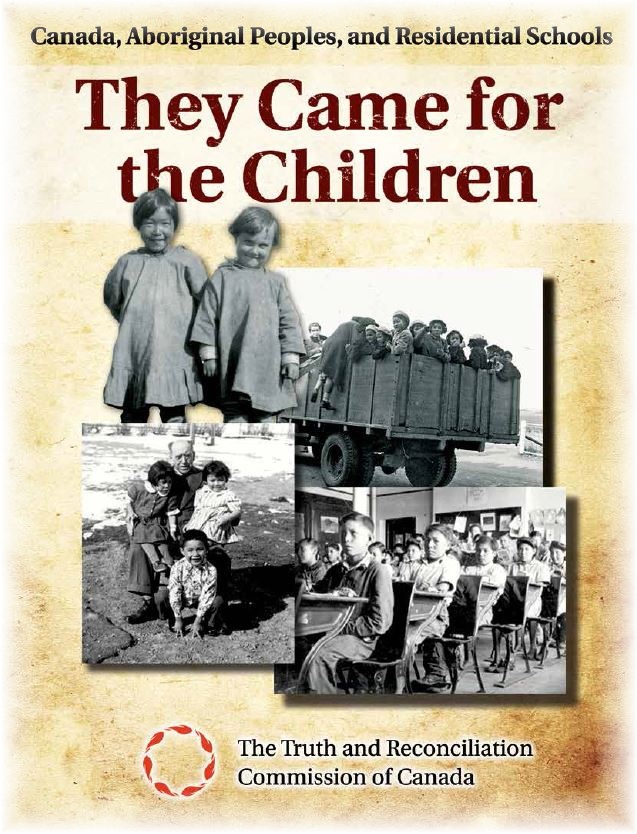 While I am sure he followed the letter of the mandates, witness some of the closing remarks
by Justice Murray Sinclair, Chair of the Truth and Reconciliation Commission, June 2015:
``The Commission’s recommendations outline specific actions to redress the harmful and disgraceful legacy of the residential school system in Canada.
``Today, I stand before you and acknowledge that what took place in residential schools amounts to nothing short of cultural genocide ( also recently so-called by Chief Justice Beverly MacLaghlan) – a systematic and concerted attempt to extinguish the spirit of Aboriginal peoples.
``The Canadian Harper government’s rejection of the Declaration of the Rights of Indigenous Peoples (July 2007 - only UN member, other than Putin`s Russia, to vote against adoption - pleasant company ) sends a clear message to Aboriginal people in Canada, all Canadians, and the world.
( in a CBC interview Justice Sinclair noted that Canada didn't sign the document when it was accepted by the UN in 2007, but Sinclair says the federal government has since `supported`` it. "They did adopt it as an aspirational document, and that's their words. And we agree with that," he said. "It should be an aspirational document. So what we're saying to them is, 'Aspire to it.'" )
``We believe the current government is not willing to make good on its claim that it wishes to join with the Aboriginal people in Canada in “a relationship based on the knowledge of our shared history, a respect for each other and a desire to move forward together” as promised nine years ago.
``Words are not enough. Reconciliation requires deliberate, thoughtful and sustained action.
``Political action will be required to break from past injustices and start the journey toward reconciliation.``
In a Related Story..... From CBC & The Star 2014:
The federal government was obliged to turn over its archival records on Indian residential schools to the Truth and Reconciliation Commission, an Ontario court decided Thursday. In his decision, Justice Stephen Goudge said the obligation to provide the materials is clear from the settlement agreement that established the commission.
"The plain meaning of the language is straightforward," Goudge said. "It is to provide all relevant documents to the TRC." The decision comes in an increasingly acrimonious dispute between Ottawa and the commission over millions of government documents the commission says it needs to fulfil its core mandate.
[Harper Government ] Aboriginal Affairs Minister John Duncan said the [Harper] government was reviewing the decision. "The decision is anything but clear-cut," Duncan told the House of Commons during question period Wednesday. "The discussion in terms of relevant documents is left somewhat open by the judge. We believe that we've been meeting the spirit and intent [of the agreement], but if there is a slightly different interpretation we will meet the spirit and intent of the judge's decision."
Preliminary estimates identify up to 60,000 boxes of material . . . requiring review,” says a procurement notice. “A significant portion of these documents are not available in a digitized and searchable format, which is a requirement for the disclosure of documents to the TRC.”
T&RC Recommendations to churches - June 2015
The commissioners aim an entire section of their recommendations toward Canadian churches. They are called upon to fully support the UN declaration as the framework for reconciliation. Much of what the TRC asks churches to do deals with education. The commission wants them to develop educational strategies to ensure that people in the pews learn about their church’s role in colonization and in residential schools. Churches are also asked to engage further in community-based healing and reconciliation projects and to develop and sign a Covenant of Reconciliation that would identify principles for working collaboratively to advance reconciliation in Canadian society.
Another key recommendation is that churches repudiate the Doctrine of Discovery. The doctrine was issued by Pope Alexander VI in 1493, and it played a central role in the European conquest of the New World. Its key premise was that European monarchies could treat Indigenous lands as “unoccupied” and therefore available to be “discovered”, despite that fact that the lands had been occupied and used since time immemorial. The doctrine persists in the law and the psychology of many countries, including Canada, the United States, Australia and New Zealand.
( you can follow up Church member's activism & discussion at KairosCanada.org )
Other key T&RC Recommendations
The federal government should work with aboriginal organizations:
- Call a public inquiry into missing and murdered indigenous women and girls,
- Review and amend statues of limitation for historical abuse against aboriginal people,
- Work to eliminate the overrepresentation of aboriginal people in custody,
- Allow trial judges to deviate from mandatory minimum sentences,
- Work to settle claims from those residential school survivors who were excluded from the settlement agreement, such as the Métis, those who attended day schools and those who went to residential schools in Newfoundland and Labrador.
- Develop a Royal Proclamation of Reconciliation that would reaffirm the nation-to-nation relationship between Aboriginal peoples and the Crown;
- Get an apology from the Pope, by June 2016, for the role the Roman Catholic Church played in the abuse of Aboriginal children in Catholic-run schools;
- Create a mandatory, age-appropriate curriculum on residential schools, treaties and the contributions of Aboriginal people taught across Canada from kindergarten to grade 12;
- Build a highly visible Residential Schools Monument in the capital city of each province and territory;
- Develop and implement strategies to identify, document, maintain and commemorate cemeteries at former residential schools, or other sites where their students are buried;
- Increase funding for the CBC/Radio-Canada so that it can better support reconciliation and include the languages and perspectives of Aboriginal peoples;
- Change the Oath of Citizenship to include language surrounding “Treaties with Indigenous Peoples.”
What do You think of these ???
 Unsettling the Settler Within, Book by Paulette Regan - 2010
( Research Director of Truth and Reconciliation Commission)
From the forward, by Tiaiake Alfred ( prof Indigenous governance, UVIC)
``Writing from a settler perspective primarily for other settlers the author avoids the trap that so many non-Native scholars fall into - telling Native people how we must live. Instead, she homes in on what settlers must do to fix "the settler problem". By this, she means that non-Natives must struggle to confront their own colonial mentality, moral indifference, and historical ignorance, as part of a massive truth telling about Canada's past and present relationship with the original inhabitants of this land. The author argues that the settler version of national history would mean that non Natives would .. have to stop thinking of us as "obstacles" or "problems", counter- intuitive in Canadian society.
``I am highly skeptical of the vision of reconciliation embraced by most Canadians. There is a growing sense ..as we accept apologies and payments for the crimes of residential schools, or jobs and contracts in exchange for stolen lands, forgivness is implied. What is the message - that material compensation can address the crimes of colonialism? Yes. Most Canadians believe that once money is paid to a Native or "Natives" in general, these questions are dead....
``What is this notion of reconciliation doing for Canadian society, and what is it doing for Native people? More than anything else, it is obscuring. The author shares my skepticism and then proceeds to dig more deeply into what a process of ethical truth telling and genuine reconciliation entails. What she proposes is not an easy quick fix but gives Native and non-Native alike food for thought about how to break through the colonial impasse that continues to define our relationship.
``Paulette Regan has offered us a necessary vision of being Canadian that reflects her hard-earned clarity and a fearless honesty. ``
Paulette Regan, in the closing chapter: Peace Warriors and Settler Allies
``Historically and to the present, we remain obsessed with solving the Indian problem, even as we deflect attention from the settler problem. In doing so, we ignore our complicity in maintaining the colonial status quo.
``The question now is whether we will remain colonizer-perpetrators or strive to become more ethical allies in solidarity with Indigenous people. As a settler ally, I must continuously confront the colonizer-perpetrator in myself, interrogating my own position as a beneficiary of colonial injustice.
``Rather, we will remain benevolent peacemakers, colonizer-perpetrators bearing the false gift of a cheap and - meaningless reconciliation that costs us so little and Indigenous people so much. But what if we were to offer the gift of humility as we come to the work of truth telling and reconciliation? Bearing this gift would entail working through our own discomfort and vulnerability .....(it) involves nothing less than a paradigm shift that moves us from a culture of denial toward an ethics of recognition.
``I ask non-Indigenous readers to resist denying, dismissing, or rationalizing my words. I invite you instead to question the myth, to name the violence, to face the history - to turn over the rocks in your own garden, which has been cultivated with such care. Connecting head, heart, and spirit in ways that value vulnerability and humility enables us to accept harsh truths and to use our moral imagination ..... ``
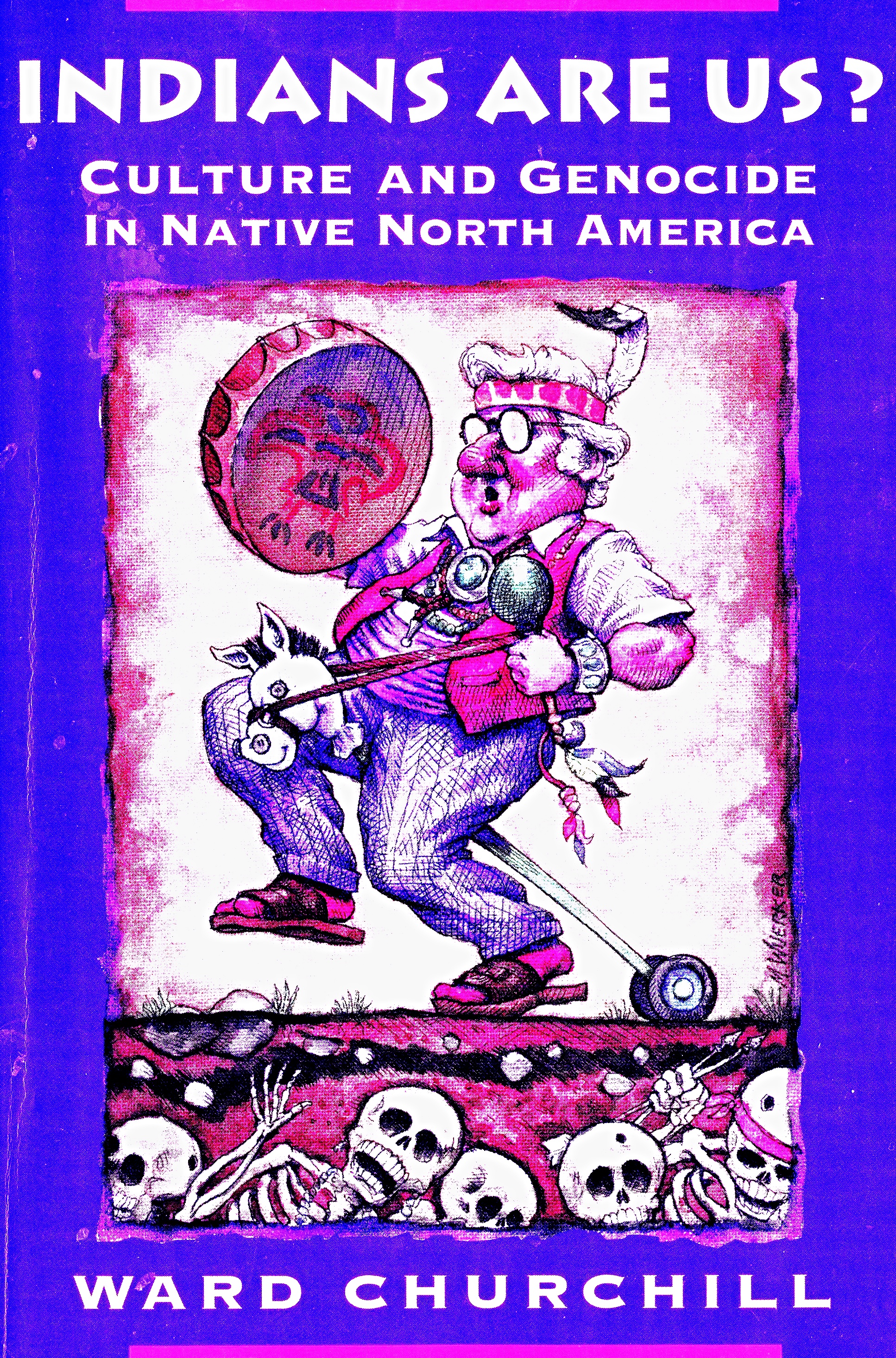 Indians Are Us? Book by Ward Churchill - 1994 - American Indian Movement leader/author.
( If you enjoy a good quibble about PC terminology and concepts - native, tribe, First Nation, aboriginal, settler, compassion, genocide, reconciliation, treaty rights - watch out with Ward. American native nations have a slightly different struggle ( as Tom King tells) - but nothing new, and Ward can really delve.
This is a short extract from an essay by Ward on wannabe Indians and modern sympathetics; here he cuts into mens-group fashion - wild-men, appropriated drumming & faux rituals - that wisped by in the 90`s. )
``....and perhaps most of all why would such extraordinarily priviliged individuals as those who flocked to Robert Bly - a group marked by nothing so much as the kind of ego driven self-absorbtion required to insist on its `right`to impose itself on a tiny minority even to the point of culturally exterminating it - opt to do so in a manner which makes them appear not only repugnant but utterly ridiculous to anyone outside their ranks..
`` Sometimes it is necessary to step away from a given setting in order to better understand it. For me, the answers to these seemingly inexplicable questions were to a large extent clarified during a recent (unpaid) political speaking tour of Germany, during which I was repeatedly confronted by the spectacle of Indian "hobbyists," all of them men resplendently attired in quilliwork and bangles, beaded moccasins, chokers, amulets, medicine bags, and so on. Some of them sported feathers and buckskin shirts or jackets; a few wore their blond hair braided with rawhide in what they imagined to be high plains style (in reality, they looked much more like Vikings than Cheyennes or Shoshones). When queried, many professed to have handcrafted much of their own regalia. A number also made mention of having fashioned their own pipestone pipes, or to have been presented with one, usually after making a hefty monetary contribution, by one of a gaggle of Indian or pretended-Indian hucksters ``
(fyi, see CBC Doc Winnetou by Drew Hayden , CBC Coverage on this..)
 The Comeback , Book by John Ralston Saul - 2014 ( Canadian philosopher, historian, author)
"The situation is simple. Aboriginals have made and will continue to make a remarkable comeback. They cannot be stopped. Non-Aboriginals have a choice to make. We can continue to stand in the way so that the comeback is slowed and surrounded by bitterness. Or we can be supportive and part of a new narrative.
".. What I mean is that our ... responses distract us from the reality that most of the problems faced by Aboriginal peoples are solvable. And our pessimism - our guilt, sympathy and dismissal - blocks these perfectly achievable resolutions. Aboriginal peoples are in the process of solving them. We are still getting in the way. And, yes, non-Aboriginals have a choice: we can go on allowing our governments and power systems and corporations to slow or attempt to stop or deform this return of the founding peoples to their proper place. Or we can listen and to understand what is happening. And then we can ensure that we do not continue to be the problem.
"Let me put this another way. I believe that whatever governments in Canada do, positive or negative, aboriginal peoples will continue to grow in strength and influence. The question that each of us must ask ourselves is whether we want to play our role as citizens - as treaty people. Or whether we are going to hang on to our old habits no matter how disguised as sympathy or ignorance or technical legal difficulties or budgetary difficulties - and so betray our obligations as Canadian citizens.
"In circumstances such as this 1 have no sympathy for myself as a citizen. It is my government, my civil service. Mine and yours. It has shamed all of us by prevaricating, lying, causing suffering to fellow citizens. In this case, the word shame must be used. We and those suffering are the Crown. We are the source of Canada's fiduciary responsibility. And we, through our government are cheating, and humiliating citizens who already have been humiliated by our governmental education system."
First Nations ,Second Thoughts, Book by Tom Flanagan 2000 ( witten in pre Harper Era)
Thomas King: ``Flanagan has little patience with treaties and Native Status... and has argued ... in his role as an advisor to Stephen Harper, for the dissolution of Indian reserves and federal status. `Call it assimilation, call it integration, call, it adaptation', says Flanagan, ``call it whatever you want, it has to happen````
If you have friends across the country, especially Albertans, you may hear similar attitudes from them - Flanagan is just one of the more strident, articulate proponents of this 'be dammed' attitude. It resonates with many, many Canadians. A similar approach was well presented a few years back in Mel Smith's Book: Our Home OR Native Land,. 1996.
I have to give some praise to Flanagan's work for breadth, historical scholarship, and legal research. It has some great background, examples of academic and adventurous policy thinking not in line with latest Supreme Court thinking, (but has a more Albertan reform party slant) - but like me, and others, you too should make a point of uncovering the inconsitencies, dubious logic from this maverick intellect. We too need to be sharp. ( I`m soo tempted to say - You might be a redneck if....)
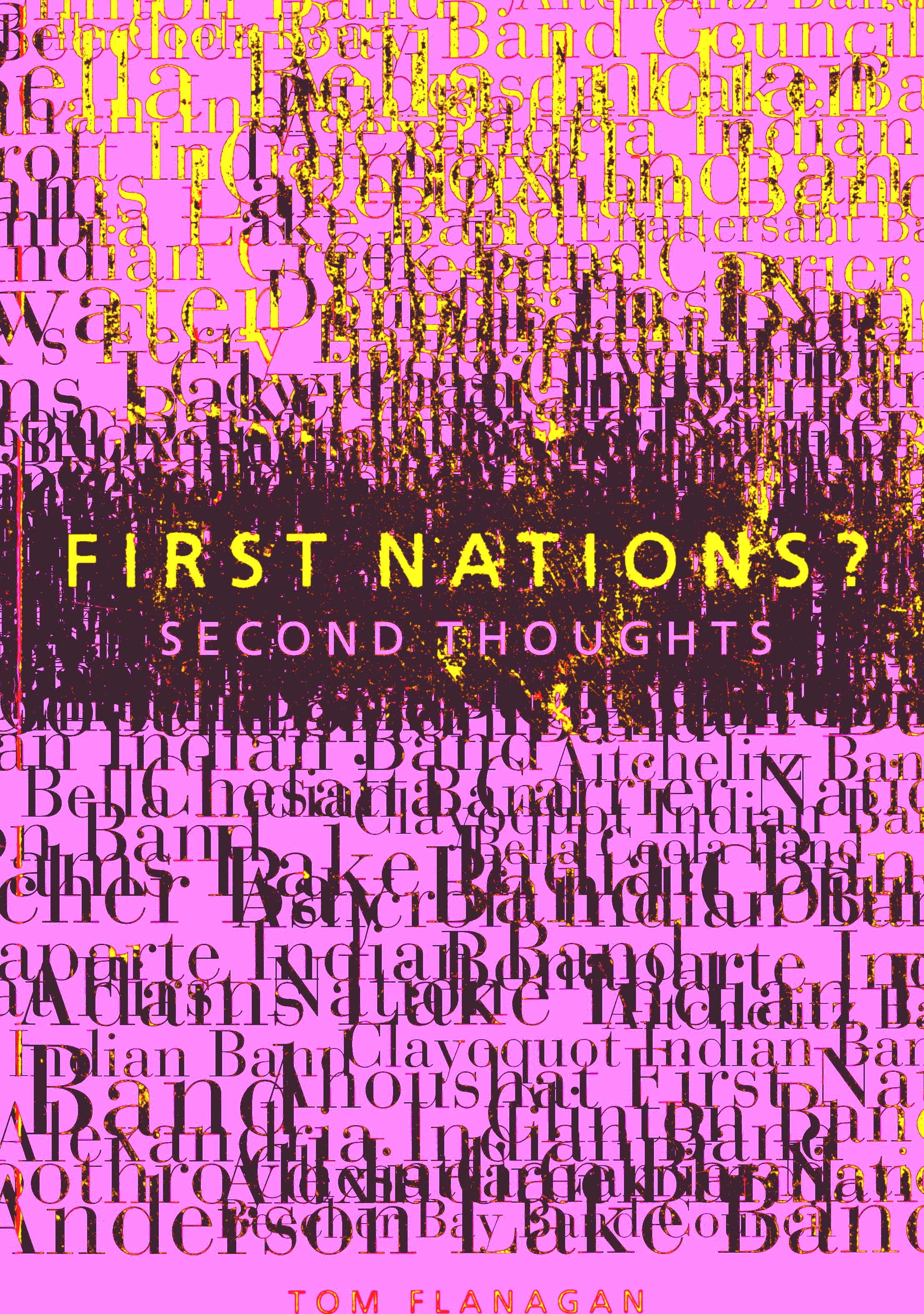 Extract from Flanagan's forward: "What I call the aboriginal orthodoxy is an emergent consensus on fundamental issues. It is widely shared (recall this is pre Harper era critique) among aboriginal leaders government officials, and academic experts.....
``But even though only a few of the RCAP (Royal Commission on Aboriginal Peoples) proposals (1996) have been implemented, the Report itself stands as a monument to the new orthodoxy, and the people who share those beliefs are actively pushing the federal government to move in that direction. Unless there is serious public debate, sooner or later we are likely to end up where the RCAP wanted us to go. Canada will be redefined as a multinational state embracing an archipelago of aboriginal nations that own a third of Canada's land mass, are immune from federal and provincial taxation, are supported by transfer payments from citizens who do pay taxes, are able to opt out of federal and provincial legislation, and engage in "nation to nation" diplomacy with whatever is left of Canada. That is certainly not the Vision of Canada I had when 1 immigrated in 1968 and decided to become a Canadian citizen in 1973; I doubt it's what most Canadians want for themselves and their children. But it's what we may get if we don't open the debate on the aboriginal orthodoxy.
``Perhaps the damage to Canada would be tolerable if it meant that aboriginal peoples would escape from the social pathologies in which they are mired to become prosperous, self-supporting citizens. But I believe the actual outcome of implementing the aboriginal orthodoxy would be quite different. Although aboriginal leaders might achieve rewarding political careers, most aboriginal people would remain poor and dependent, marginalized on reserves and other territorial enclaves. This would be a lose-lose situation in which Canada and aboriginal peoples would both become worse off than they should be. Eight of the propositions in the aboriginal orthodoxy are particularly dubious. They are stated below...`` ( see his book)
In a review of Flanagan's work by Mario diSantos (ftlcomm.com) he notes: ``This professor Flanagan is ``uber alles`` and therefore there is no comment to induldge on his writing without adding that he has contract work with the federal Justice department(on native policy) and that he has never visited a reserve.``
``Please don`t read this book unless you have a toilette in front of you."
Boxing the Four Corners of Aboriginal Self-Government -
paper by Russel Lawrence Barsh( 2001 , pre Harper government era)
"HERE'S A STORY.
``A left-leaning legal scholar, a political scientist interested in problems of national identity, an Aboriginal lawyer and a right-leaning historian square off in a dispute over the future of Aboriginal self-government. Their punch lines can be summarized in a few words. Patrick Macklem argues in Indigenous Dfference and the Constitution of Canada (2001) that Aboriginal self-government is entirely consistent with, if not required by, the constitution of Canada as revised in 1982. Pow! Alan Cairns replies with a haymaker in A People 's Dream: Aboriginal SeIf-Government in Canada ( 2000), warning that a System of self-absorbed Aboriginal governments will fray Canada's social fäbric. Ouch! Dan Russell trows the next punch as he observes in Indigenous Difference and the Constitution of Canada (2001) that Aboriginal self-government seems to work tolerably well in the United States and so may also work in Canada. Thud! Finally, Tom Flanagan moves in for the kill with a right hook: self-government, he argues in First Nations? Second Thoughts ( 2000), will keep Aboriginal people backward and oppressed. Kapow!
``During my brief tenure as adviser to the Treaty Commissioner in Saskatchewan, I recruited former premier (and RCAP member) Alan Blakeney as a sounding board. The first day we met at my office in Saskatoon, I asked Alan what he thought the new Treaty Commission could best do to improve relationships between First Nations and their white neighbors in the province. After a moments reflection, he answered: "Build hockey rinks together".
``That simple, practical advice has stuck with me. Neither government reports nor academic tomes create broader communities of interest. Working together to achieve small but concrete, everyday benefits is vastly more powerful. For some curious reason, however, Canada appears to be stuck in an elite intellectual discourse on unity and social justice that never penetrates to the grassroots.
....
``Perhaps this is a corollary of the Canadian philosophical idealism that I found refreshing when I began working with Native peoples on both sides of the international border during the Trudeau years: if Quebec or the West or First Nations are restless, then let's redesign the country and make everyone happy! This stands in sharp contrast to the realism and cynicism of American politics. Yet Canada is still arguing about the wisdom of Aboriginal self-government 70 years after the U.S. just went ahead and did it. This is not to suggest that the U.S. system of "tribal" government is perfect, for it is not. But it exists and continues to evolve in practice and through many conflicts both within tribes and between tribal, state and federal officials. Is it better to reflect and debate for a century in an effort to get it all right the first time? I am reminded that the Charter of Rights was nearly debated out of existence before Trudeau decided to take decisive action and drive it over the opposition. Inclusion of section 35 was also a last-minute act of political pragmatism and decisiveness rather than reflective deliberation."
*****
Here's a ToDo- make your own Canadian Version of the verse Pete Seeger added to Woody Gutherie's song.
This land is your land, but it once was my land,
Until we sold you ManhattanIsland.
You pushed our Nations to the reservations;
This land was stole by you from me.
The great themes of Canada are as follows:
· Keeping the Americans out,
· Keeping the French in,
· and trying to get the Natives to somehow disappear.”
– Will Ferguson, humorist and 2012 Giller Prize winner
Quoteworthy:
``. .. challenging a paradigm is not a part time job. It is not sufficient to make your point once and then blame the world for not getting it. The world has a vested interest in, and commitment to, not getting it`
Donella Meadows ( co-author, The Limits to Growth -1972 . and more..)
``The morning freshness of the world-to-be intoxicated us. We were wrought up with ideas inexpressible and vaporous, but to be fought for. We lived many lives in those whirling campaigns, never sparing ourselves: yet when we achieved and the new world dawned, the old men came out again and took our victory to remake in the likeness of the former world they knew. Youth could win, but had not learned to keep, and was pitiably weak against age. We stammered that we had worked for a new heaven and a new earth, and they thanked us kindly and made their peace.”
T.E. Lawrence, Seven Pillars of Wisdom - 1926
I started a small site at IdleWatch.MayneHome.Net, to collect my own notes and interesting links on these topics. It grows, especially after the Mayne Reads circles. This doc will be there also. If you have material you'd like to add or other suggestions about web use let me know at jpharvey at shaw.ca. Articles on a website can be easily referenced from other sites, FaceBook Posts etc, a good way to continue conversations. Joel.